
June 26th, 2026
Sauna vs Steam Room: Which Heat Therapy Is Right for Your Facility?
Wellness has shifted from a nice-to-have to a genuine driver of memberships and bookings, and heat experiences sit right at the centre of it. For operators of gyms, hotels, spas and leisure centres, the practical question is rarely whether to offer heat, but which form of it to install. Saunas and steam rooms can look almost interchangeable on a brochure, yet they behave very differently in cost, space, upkeep and member appeal. This guide compares the two on the five things that actually matter when you are signing off on the investment, so you can choose the option that fits your site and your members rather than the one that simply sounds impressive. It also flags the compliance and running-cost realities that are easy to overlook at the brochure stage but expensive to discover after the installation is in.
What are the core differences between dry heat and wet heat?
The simplest way to understand the choice is by heat type. A sauna delivers dry heat, usually between 70 and 100 degrees Celsius, at a low relative humidity of around 10 to 20 %. A steam room does the opposite: it runs cooler, at roughly 40 to 45 degrees Celsius, but holds humidity at close to 100 %. That difference in moisture changes everything about how the room feels. Dry heat feels intense and penetrating, while warm steam feels enveloping and gentler on the lungs. Both create a heat experience, but they suit different tastes, which is worth understanding before you commit to a single commercial steam room and sauna installation.
Member experience and appeal
Member preference rarely splits cleanly down the middle. Steam rooms tend to appeal to people who find a hot sauna uncomfortable, and the warm, moist air is popular for relaxation and for easing the body after a workout or a swim. Saunas attract members who want a hotter, more traditional ritual, including the social element of a shared cabin. Older and first-time users often gravitate to the gentler steam room, while committed sauna users can be loyal to the point of choosing a gym for it. If your facility serves a broad demographic, offering both removes the need to pick a winner and gives more members a reason to stay longer and renew. Heat experiences also feature prominently in the amenities lists that prospective members compare, so they earn their keep in your marketing as well as on the gym floor.
Running costs and energy
Both experiences consume energy, but in different ways. A sauna heats the air in an insulated cabin to a high temperature and then holds it, so the main cost is electrical heating, influenced by how often the cabin is brought up to temperature and how well it is insulated. A steam room relies on a generator to boil water into vapour, which means energy plus a steady supply of water, and the system needs regular descaling because hard water leaves scale that reduces efficiency. Specifying reliable steam room generators and maintaining them properly is the single biggest lever on the long-term running cost of a steam room, so it pays to build servicing into the budget from the start rather than treating it as an afterthought. Simple measures such as timers, occupancy controls and a water softener can take a meaningful slice off both bills over a year, and they are far cheaper to design in at the build stage than to retrofit later.
Space, installation and maintenance
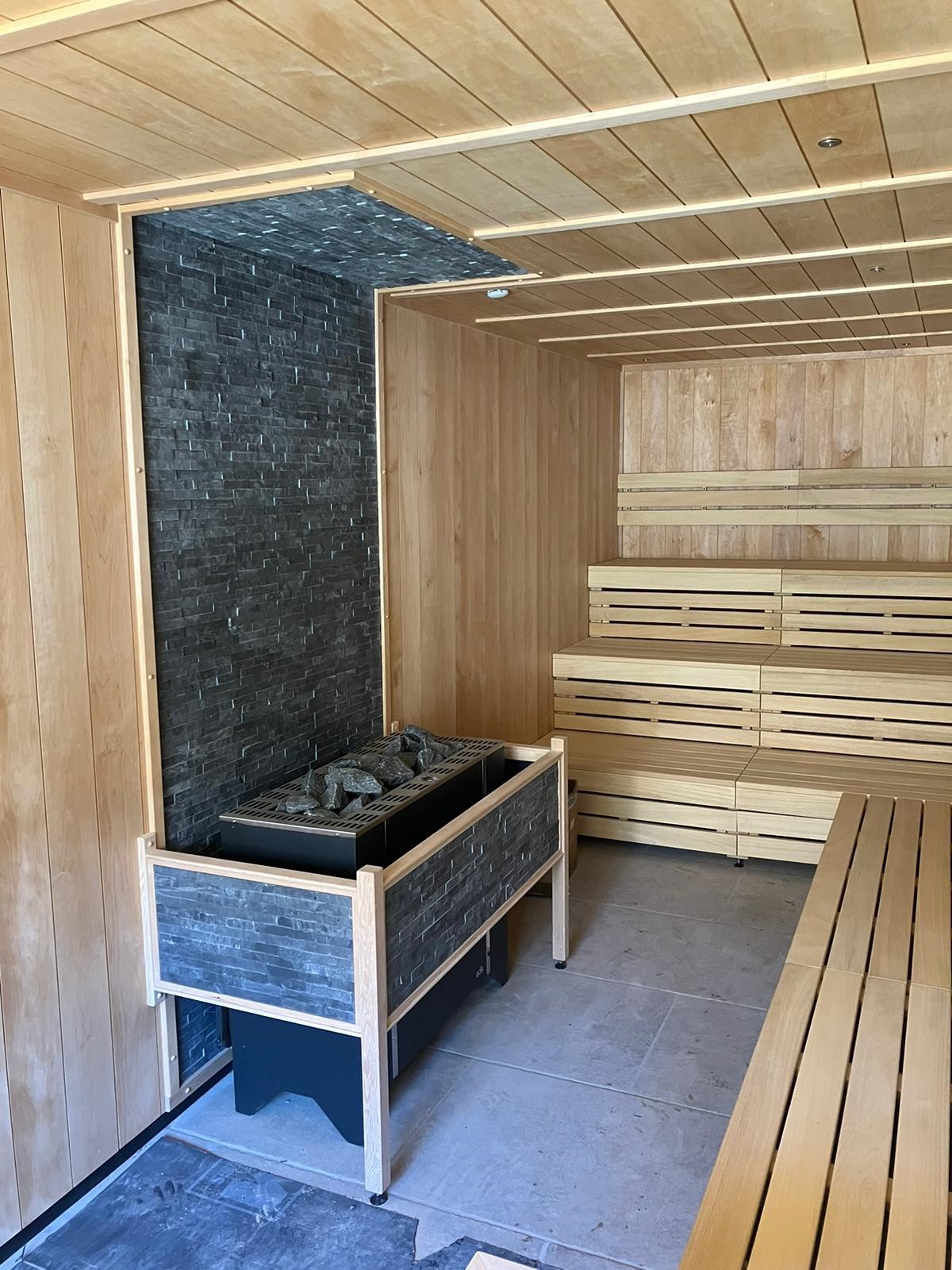
The two buildings are not alike. A sauna is essentially an insulated timber cabin with a heater and benches, which can be installed in a relatively contained footprint and is straightforward to keep clean. A steam room is a sealed, fully tiled and tanked enclosure with a sloped ceiling to manage condensation, a generator housed nearby, proper drainage and dedicated ventilation. That makes a steam room more involved to install and more demanding to maintain, because every wet surface has to stay hygienic and watertight. Saunas have their own upkeep, from heater elements to bench care and the right sauna equipment, but in general, a sauna is the lighter maintenance commitment, while a steam room rewards a disciplined cleaning and servicing routine. Whichever you choose, planning for easy access to the heater or generator, and for the cleaning the space will need, keeps the running of it simple once the doors open.
Hygiene and compliance
Any warm, wet environment carries a higher hygiene and compliance burden, and steam rooms in particular need careful water management. Standing water, generators and warm pipework can support bacterial growth if they are neglected, so a managed cleaning regime and attention to Legionella control are essential. The HSE guidance HSG282 and the standards set out by the Pool Water Treatment Advisory Group are the reference points operators are expected to work to. None of this is a reason to avoid a steam room; it simply means the experience should be installed and looked after by people who understand the engineering and the regulations behind it.
Matching the choice to your facility type
It helps to map the decision onto the kind of site you run. A budget or high-throughput gym often does best with a single, robust sauna that needs minimal supervision. A boutique studio or recovery-focused brand can make a gentle steam room a signature part of the experience. Hotels and destination spas usually justify both, because guests expect a full thermal suite and will pay for it. Leisure centres serving a mixed public tend to value the steam room’s accessibility for less confident users, while still drawing keen sauna regulars. The right answer follows your members, your footprint and the price point you are pitching at.
So, which should you choose?
For many operators, the honest answer is not strictly one or the other. If space and budget are tight, a sauna is the simpler, lower-maintenance entry point. If your brand is built on relaxation and recovery, the gentler steam room may map better to what members expect. Where you have the room and the appetite to invest, the strongest wellness proposition is to offer both and pair them with a cold plunge, since alternating hot and cold is the basis of contrast therapy, a fast-growing draw for recovery-focused members. Adding hot and cold tubs alongside your heat experiences turns a single amenity into a complete recovery circuit that competitors without one cannot match. Whichever way you lean, the decision is far easier to live with when the build, the running costs and the maintenance plan are scoped together from the outset.
With a 24/7, 365 days per year technical helpline and helpdesk/call out provision, we are always on hand to support your business
Call us:
01376 513246